


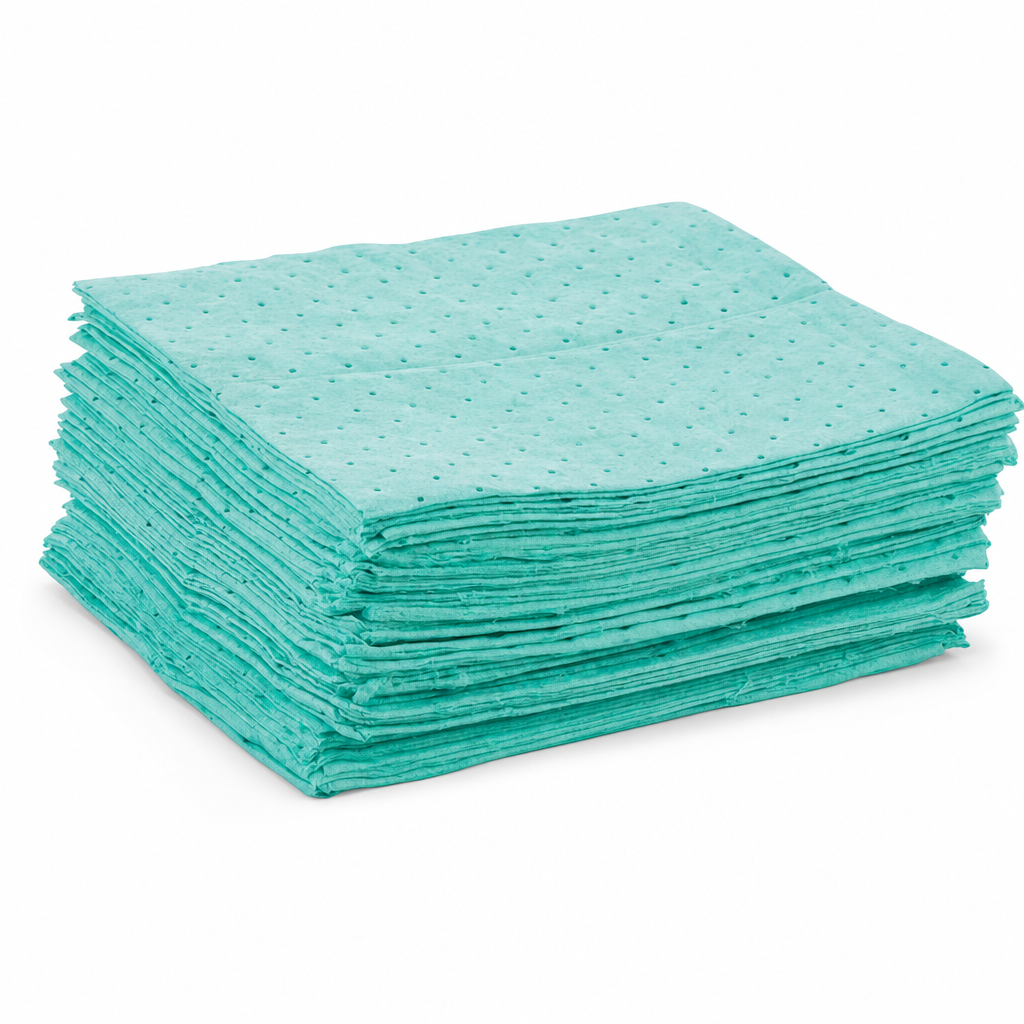
Quickly contain hazardous leaks and drips with these chemical spill absorbent sheets, designed for safe handling of aggressive liquids in the workplace.
Available in light or heavy absorbency grades, these sheets offer reliable performance for everyday maintenance tasks or emergency spill response.
Product Features
- Specially designed for absorbing chemical spills, leaks and splashes
- Choice of light or heavy absorbency to match your spill control needs
- Supplied in bulk quantities to support regular use in busy areas
- Helps improve workplace safety and cleanliness around process equipment
- Suitable for use in spill kits or as stand-alone absorbent stock
- Supports compliance with environmental and safety procedures for spill control
Key Specifications
| Absorbency level | Number of sheets | Total absorption capacity |
|---|---|---|
| Light absorbency | 200 | 144 L |
| Heavy absorbency | 100 | 136 L |
Applications
- Containing and cleaning up chemical spills in warehouses and workshops
- Positioning around drums, IBCs and chemical storage areas
- Use in laboratories and production lines handling aggressive liquids
- Stocking in spill response stations and emergency spill kits
- Routine maintenance tasks where chemical drips and leaks are common
Frequently Asked Questions
What is the difference between the light and heavy absorbency sheets?
The light absorbency sheets are supplied in a higher quantity and offer a total capacity of 144 litres, making them suitable for frequent smaller spills. The heavy absorbency sheets are thicker per sheet, with a total capacity of 136 litres across fewer sheets, ideal for larger or more concentrated spills.
Can these chemical absorbent sheets be used with all types of liquids?
These sheets are intended for chemical spill control and are suitable for many aggressive liquids. Always check the chemical compatibility of your specific liquids with chemical absorbents and follow your site safety data sheets and procedures.
How should used absorbent sheets be disposed of?
Disposal requirements depend on the type of liquid absorbed and local regulations. Contaminated sheets should be treated as hazardous waste where applicable and disposed of in accordance with your company procedures and relevant environmental legislation.