


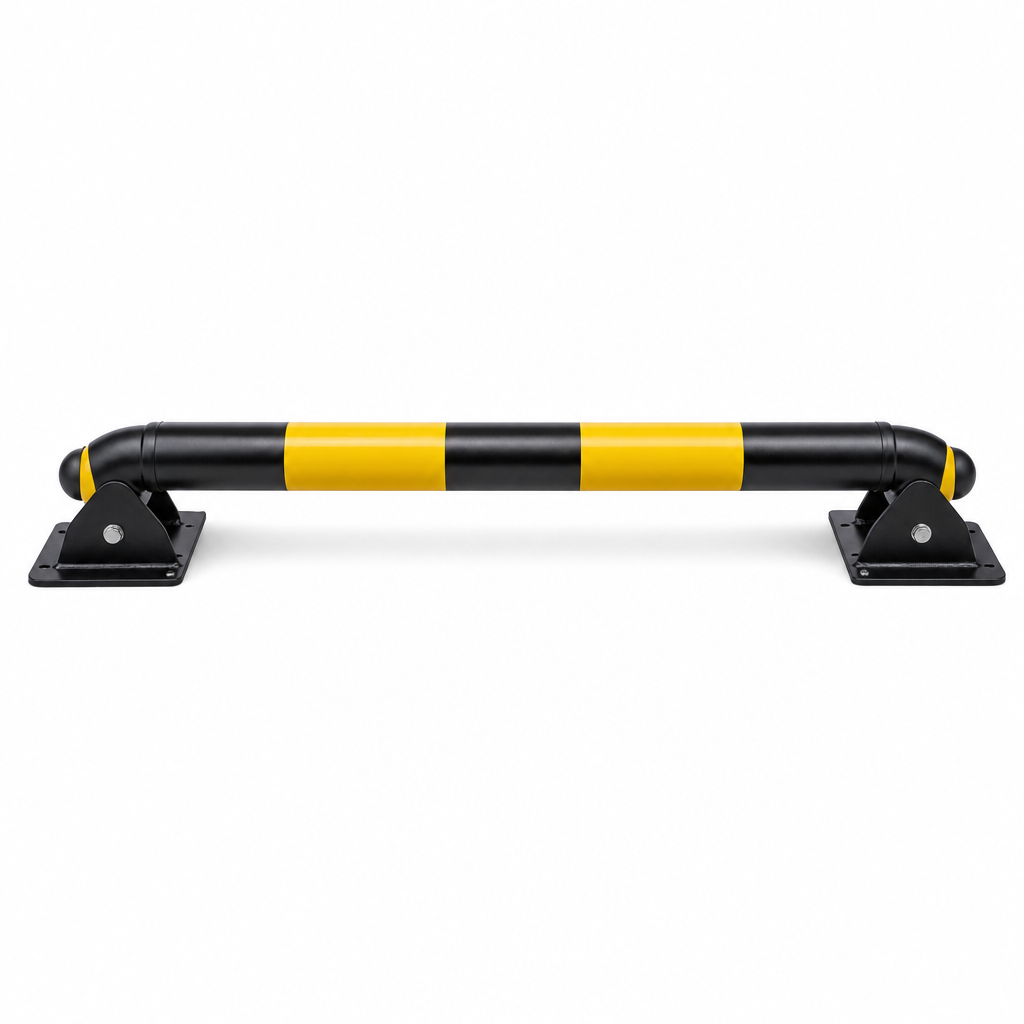
Protect vulnerable areas in busy environments with this robust floor level collision bar. Designed to act as a low-level barrier, it helps prevent damage from pallet trucks, trolleys, and other workplace traffic.
Ideal for use around racking, machinery and walkways, this collision bar offers a simple yet effective way to improve on-site safety and clearly define protected zones.
Product Features
- Low-level protection against impacts from pallet trucks and trolleys
- Helps safeguard racking uprights, machinery bases and structural columns
- Clear, physical barrier to separate vehicles from protected areas
- Suitable for warehouses, factories, loading bays and goods-in areas
- Available in multiple widths to suit different protection zones
- Durable construction designed for demanding industrial environments
Key Specifications
| Product type | Floor level collision bar |
|---|---|
| Use | Traffic and impact management at floor level |
| Overall width options (mm) | 400, 800, 1200 |
| Installation | Fixed barrier at floor level |
| Typical price range (excl. VAT) | £121.80 - £226.80 |
| Suitable environments | Warehouses, factories, industrial sites |
Applications
- Protecting pallet racking uprights from low-level impacts
- Guarding machinery bases and equipment plinths
- Defining safe pedestrian routes alongside vehicle traffic
- Separating loading bay edges and doorway zones from traffic
- Creating protected perimeters around critical infrastructure
Frequently Asked Questions
Where should a floor level collision bar be installed?
It is typically installed in areas where pallet trucks, trolleys or forklifts operate close to vulnerable structures, such as racking uprights, machinery bases, loading bays and access points.
How do I choose the right width for my collision bar?
Measure the width of the area or asset you need to protect and select the bar width that covers it fully, allowing a little extra on each side where possible for added protection.
Can floor level collision bars be used in pedestrian areas?
Yes, they are often used to define pedestrian walkways and prevent encroachment by workplace vehicles, helping to separate people from moving traffic at floor level.