


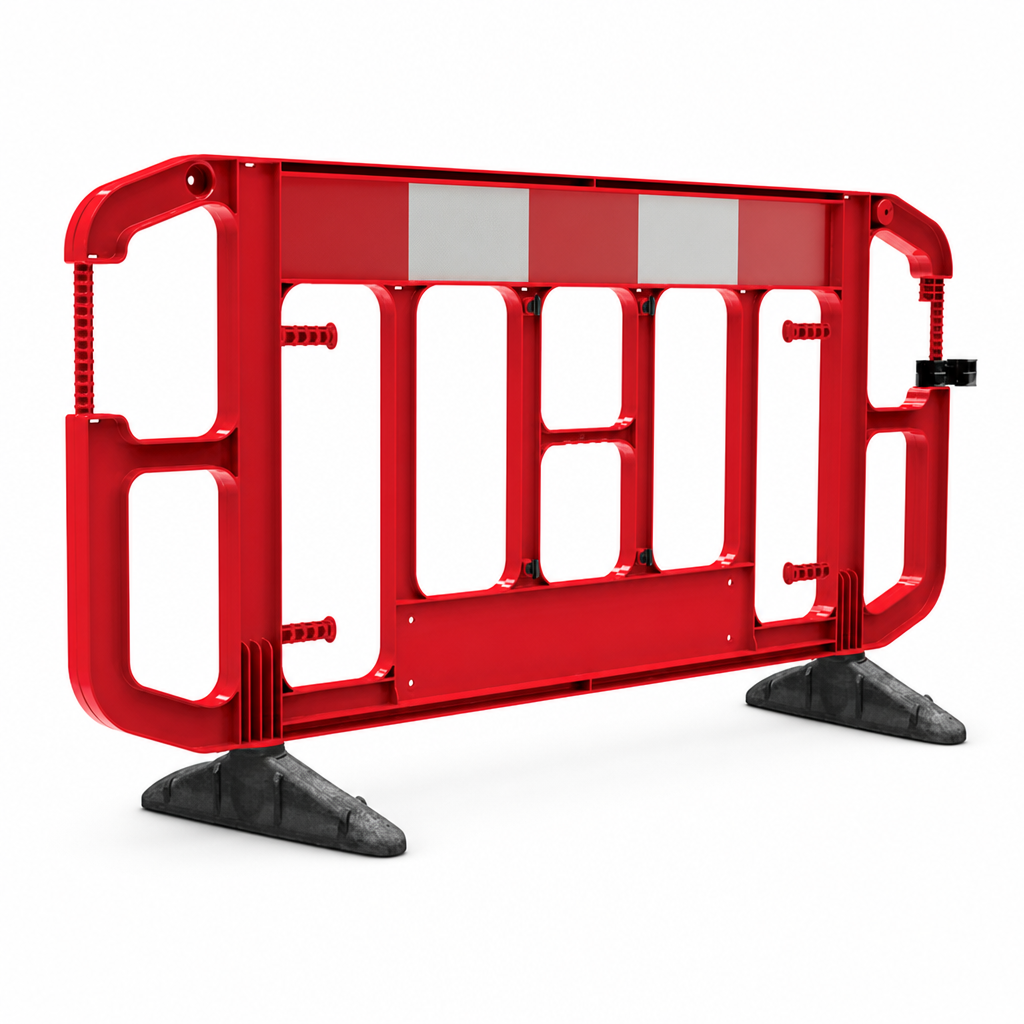
Improve on-site safety with this reflective traffic control barrier, designed to clearly demarcate restricted or hazardous areas. Its high-visibility design helps guide both vehicles and pedestrians in busy environments.
With an overall height of 1000 mm and a 2000 mm length, this barrier is ideal for creating temporary or semi-permanent safety zones on roads, car parks, and pedestrian routes.
Product Features
- Reflective surface for enhanced visibility in low-light conditions
- Overall height of 1000 mm for clear separation of traffic and pedestrians
- 2000 mm overall length to span wider gaps and define routes effectively
- Ideal for traffic management, crowd control, and perimeter marking
- Suitable for use in highways, construction sites, and public access areas
Key Specifications
| Feature | Specification |
|---|---|
| Overall height | 1000 mm |
| Overall length | 2000 mm |
| Barrier type | Traffic control barrier |
| Visibility | Reflective finish |
| Typical use | Pedestrian and road safety |
Applications
- Separating pedestrian walkways from vehicle routes on construction sites
- Defining traffic lanes and diversion routes on roads and in car parks
- Creating safe queuing and crowd control zones at events
- Marking restricted or hazardous areas during maintenance or repairs
- Enhancing visibility of work zones in low-light or poor weather conditions
Frequently Asked Questions
Is this traffic control barrier suitable for both pedestrian and vehicle areas?
Yes, the barrier is designed to help protect pedestrians and guide vehicle movement, making it suitable for mixed-use environments such as car parks, access roads, and site perimeters.
What is the overall length and height of the barrier?
The barrier has an overall height of 1000 mm and an overall length of 2000 mm, providing a substantial visible barrier for controlling access and marking routes.
Can this reflective barrier be used in low-light conditions?
Yes, the reflective finish is specifically intended to improve visibility in low-light or poor weather conditions when illuminated by vehicle headlights or site lighting.