


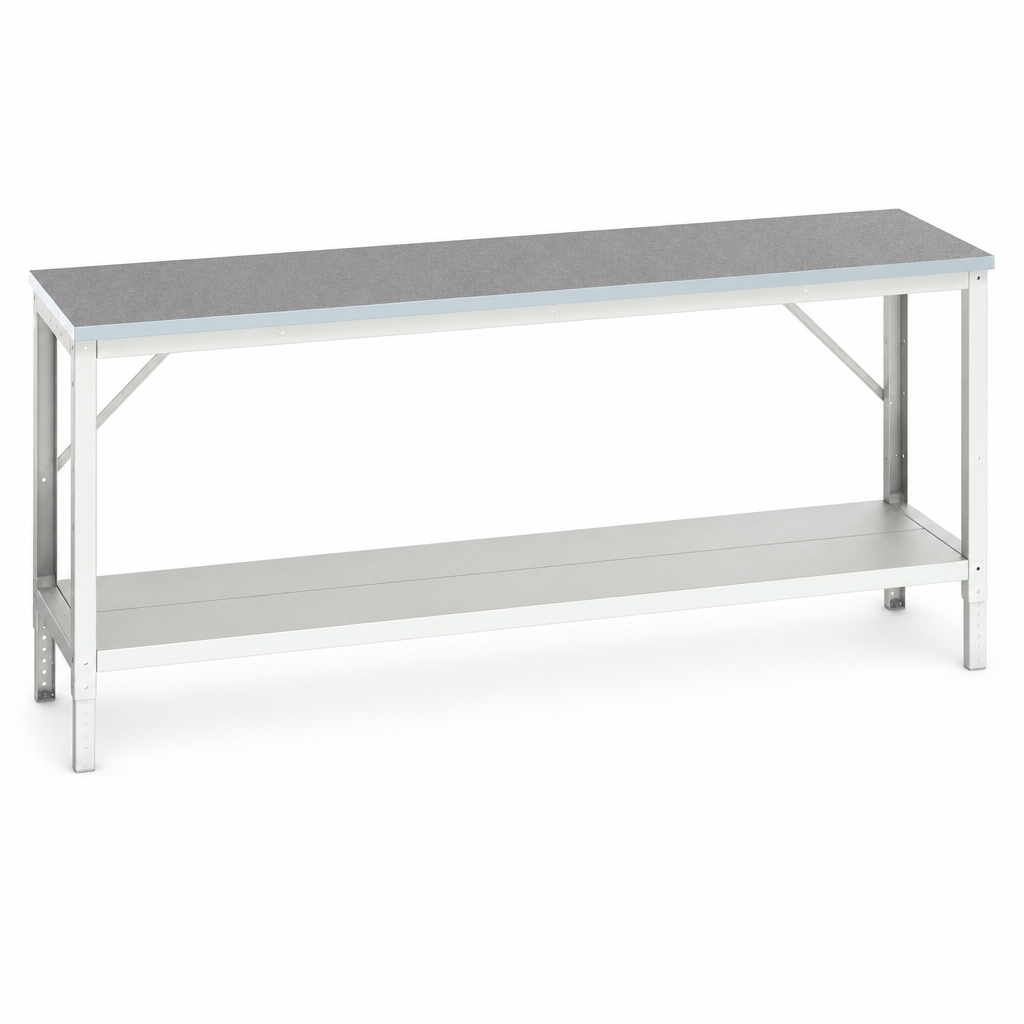
This static dissipative workbench is designed to provide a safe, controlled surface for handling electro-sensitive components. The ESD worktop helps to reduce the risk of static discharge in technical and electronics environments.
With a compact height and generous working area, it offers a stable platform for assembly, testing and repair tasks. Ideal for integration into professional workshops, laboratories and production lines.
Product Features
- Electrostatic discharge (ESD) worktop for safer handling of sensitive components
- Generous 2000mm width provides ample space for tools and equipment
- 600mm depth for comfortable working reach and layout of parts
- Robust construction suitable for demanding industrial and technical use
- Low overall height of 780mm for seated or low-profile applications
- Smooth worktop surface for easy cleaning and maintenance
Key Specifications
| Worktop type | Static dissipative (ESD) |
|---|---|
| Height | 780mm |
| Width | 2000mm |
| Depth | 600mm |
| Product type | Industrial workbench |
| Price range | £1884.00 |
Applications
- Electronics assembly and testing areas
- Laboratories handling electro-sensitive components
- Service and repair benches for circuit boards and devices
- Production lines requiring controlled static conditions
- Technical training and education workshops
Frequently Asked Questions
Is this workbench suitable for use with sensitive electronic components?
Yes, the static dissipative worktop is designed to help control electrostatic discharge, making it suitable for handling sensitive electronic components when used as part of a properly grounded ESD control system.
Can this workbench be used for both seated and standing work?
With a height of 780mm, the workbench is particularly well suited to seated or low-profile tasks. It may be used for standing work where this height is acceptable for the user and application.
Does the workbench require any special maintenance because of the ESD surface?
The ESD worktop should be kept clean and free from dust, oils and contaminants. Use appropriate cleaners recommended for static dissipative surfaces and avoid abrasive products that could damage the finish.